Umrah Guide
How to perform Umrah
The lesser pilgrimage — a journey of ihram, tawaf, sa'i, and tahallul that can be undertaken any time of the year.
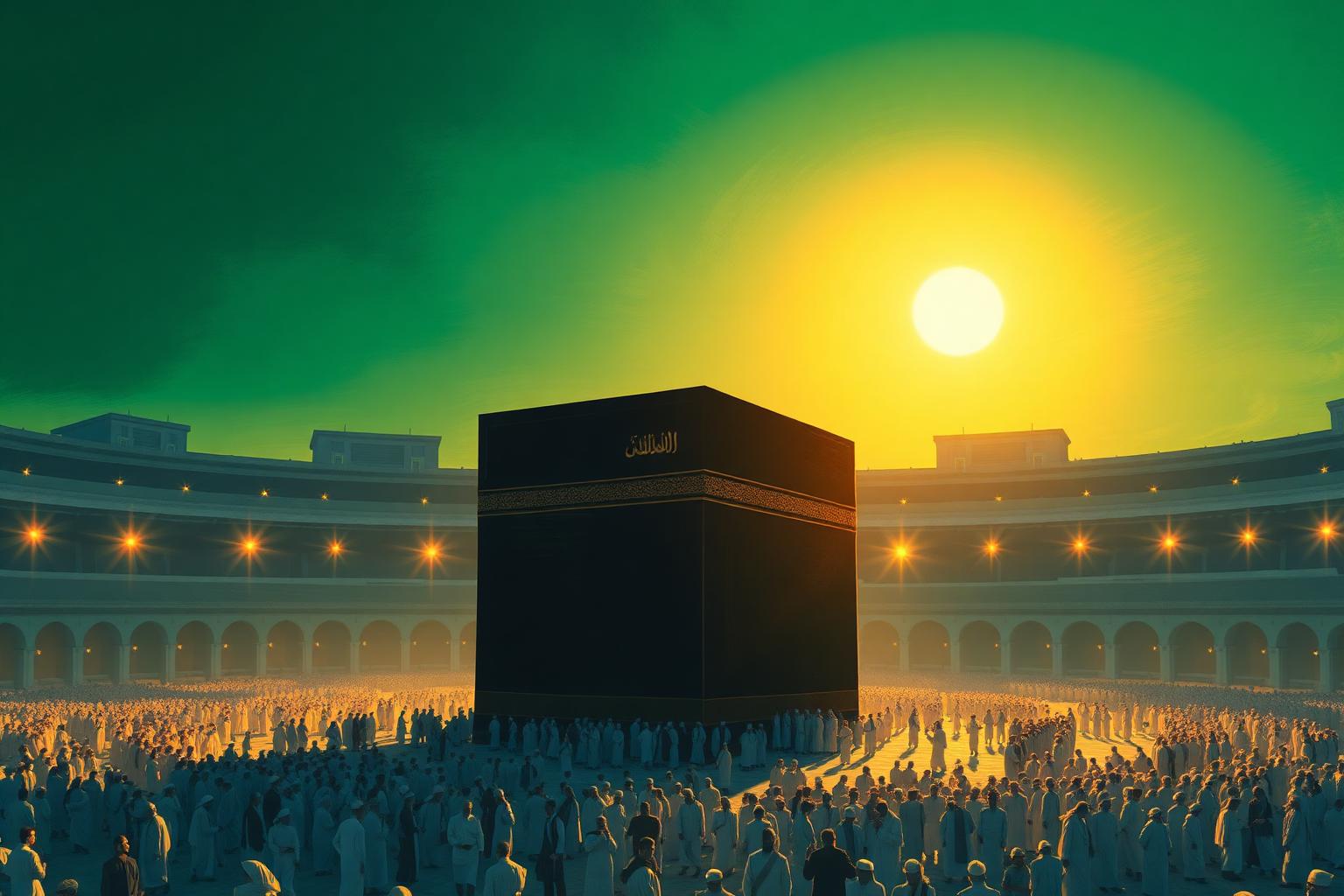
Why Umrah matters
وَأَتِمُّوا الْحَجَّ وَالْعُمْرَةَ لِلَّهِ
Wa atimmū-l-ḥajja wa-l-ʿumrata li-llāh.
"And complete the Hajj and Umrah for Allah." (Qurʾan 2:196)
A Sunnah of the Prophet ﷺ
The Prophet ﷺ performed Umrah multiple times and encouraged his companions to do so. It is a beloved act of worship that draws the believer closer to Allah.
Expiation of sins
The Prophet ﷺ said: 'The performance of Umrah is an expiation for the sins committed between it and the previous Umrah.' (Bukhari & Muslim)
Following the footsteps of the Prophets
Umrah retraces the legacy of Ibrahim, Ismail, Hajar, and Muhammad ﷺ. Every rite — from tawaf to saʿi — carries centuries of prophetic devotion.
A renewal of the soul
Dressed in simple ihram and focused solely on Allah, the pilgrim returns home with a lighter heart, a fresh start, and a deeper connection to faith.
Conditions of Umrah
- Being Muslim, of sound mind and mature
- Physical ability and safe means of travel
- Financial ability — lawful (halal) means
- A mahram for women (per the majority view)
- Sincere intention (niyyah) for the sake of Allah
Before you leave
- Learn the rites before you travel — knowledge prevents mistakes
- Settle debts and leave enough provision for dependents at home
- Pack ihram clothing, unscented soap, and comfortable footwear
- Make sincere tawbah and intend the Umrah as a spiritual reset
- Arrange accommodation near the Haram if possible
The four pillars (arkān) of Umrah
- Ihram — entering the sacred state with intention at the miqat
- Tawaf — seven circuits around the Kaʿbah
- Sa'i — seven laps between Safa and Marwah
- Tahallul — shaving or shortening the hair
Enter Ihram at the Miqat
لَبَّيْكَ اللَّهُمَّ عُمْرَةً
Labbayka Allāhumma ʿumrah
"Here I am, O Allah, for Umrah."
Perform ghusl if possible, wear the two white ihram cloths (men) or modest ordinary dress (women), pray two rakʿah, then make the intention and enter the state of ihram at the appointed miqat.
Sunnah: Trim nails, remove unwanted hair, and apply perfume to the body — not the ihram cloths — before entering ihram.
Recite the Talbiyah often
لَبَّيْكَ اللَّهُمَّ لَبَّيْكَ، لَبَّيْكَ لَا شَرِيكَ لَكَ لَبَّيْكَ، إِنَّ الْحَمْدَ وَالنِّعْمَةَ لَكَ وَالْمُلْكَ، لَا شَرِيكَ لَكَ
Labbayka Allāhumma labbayk, labbayka lā sharīka laka labbayk, inna-l-ḥamda wa-n-niʿmata laka wa-l-mulk, lā sharīka lak
"Here I am, O Allah, here I am. Here I am, You have no partner, here I am. Truly all praise, favour, and sovereignty belong to You. You have no partner."
From the moment you enter ihram until you begin tawaf, keep repeating the Talbiyah — aloud for men, softly for women.
Enter Masjid al-Haram and approach the Kaʿbah
Enter with the right foot, make the dua for entering the mosque, and move toward the Black Stone (al-Ḥajar al-Aswad) to begin tawaf. Men uncover the right shoulder (idṭibāʿ) before starting.
Perform Tawaf — seven circuits of the Kaʿbah
Starting at the Black Stone, circle the Kaʿbah counter-clockwise seven times, keeping it on your left. Men do ramal (a brisk pace) in the first three circuits. Make dhikr, dua and recite Qurʾan; there is no fixed script for tawaf.
Sunnah: Kiss, touch or point to the Black Stone at the start of each circuit while saying 'Bismillāh, Allāhu akbar'.
Pray two rakʿah behind Maqam Ibrahim
After tawaf, cover the shoulder again and pray two short rakʿah behind Maqam Ibrahim if possible — reciting Surah al-Kāfirūn in the first and Surah al-Ikhlāṣ in the second. Then drink from Zamzam.
Sa'i between Safa and Marwah — seven laps
إِنَّ الصَّفَا وَالْمَرْوَةَ مِن شَعَائِرِ اللَّهِ
Inna-ṣ-Ṣafā wa-l-Marwata min shaʿāʾiri-llāh
"Indeed Safa and Marwah are among the symbols of Allah."
Begin at Safa, face the Kaʿbah and make dua three times, then walk toward Marwah. Men jog between the green markers. That is one lap. Repeat until you complete seven, ending at Marwah.
Tahallul — shave or shorten the hair
Men shave the head (preferred) or shorten the hair uniformly. Women cut a fingertip's length from the ends. With this the state of ihram ends and its restrictions are lifted — your Umrah is complete.
Sunnah: Full shaving carries a greater reward — the Prophet ﷺ prayed three times for those who shave.
Restrictions while in Ihram
- Cutting hair or clipping nails
- Using perfume or scented products
- Marriage contracts and marital relations
- Hunting land game
- Men: covering the head or wearing sewn clothing
- Women: covering the face or wearing gloves
Guidance is based on mainstream Sunni fiqh. Consult a qualified scholar for madhhab-specific rulings.
After Umrah
- Keep the spirit of tawbah and humility alive when you return home
- Avoid major sins so your Umrah remains accepted (mabrūrah)
- Share your experience with family and friends in a way that inspires, not boasts
- Maintain patience, kindness, and prayer — the real fruit of Umrah
A dua for the accepted Umrah
اللَّهُمَّ اجْعَلْهَا عُمْرَةً مَبْرُورَةً، وَذَنْبًا مَغْفُورًا، وَسَعْيًا مَشْكُورًا، وَتِجَارَةً لَنْ تَبُورَ
Allāhumma-jʿalhā ʿumratan mabrūrah, wa dhanban maghfūran, wa saʿyan mashkūran, wa tijārtan lan tabūr.
"O Allah, make it an accepted Umrah, a forgiven sin, an appreciated effort, and a trade that will never perish."
Guidance is based on mainstream Sunni fiqh. Consult a qualified scholar for madhhab-specific rulings.